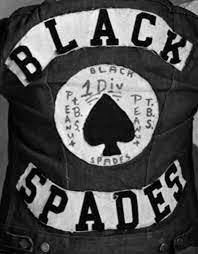
Vest of the Black Spades gang, Bronx, NYC, 1971.
Many warlords such as Bambaataa Kahim Aasim, leader of the Black Spades, wanted intergang truce. Intergang truce was accomplished in late 1971.
Peace between gang and race relations in the Bronx was necessary during the height of movement solidarity, CIA Red Scares, and post-first wave Civil Rights of the 1960s.
After the death of his cousin, Aasim was inspired by DJ artist Kool Herc to accomplish neighborhood peace through DJ parties.
Like DJ Kool Herc, Aasim then continued to master his own DJ skills by creating parties in Bronx River housing projects that promoted harmony between all who lives in the Bronx.
This included mixing different beats from all walks of life: Puerto Rican, African-American, and West Indian rhythms were a priority to include in all these house parties.
“Peacekeeping at parties attracting rival gangs required a soundtrack everyone can get behind: African-American, West Indian and Puerto Rican. But in practice it was musical revelation, demonstrating that genre, like racial divisions, were largely false constructs. If the rhyme was right, that’s all that mattered.”
W. Hermes. Love Goes to Buildings On Fire: Five Years In New York That Changed Music Forever. (2011) pp. 106. Volume 1
 Loose Lips Cast
Leave a comment