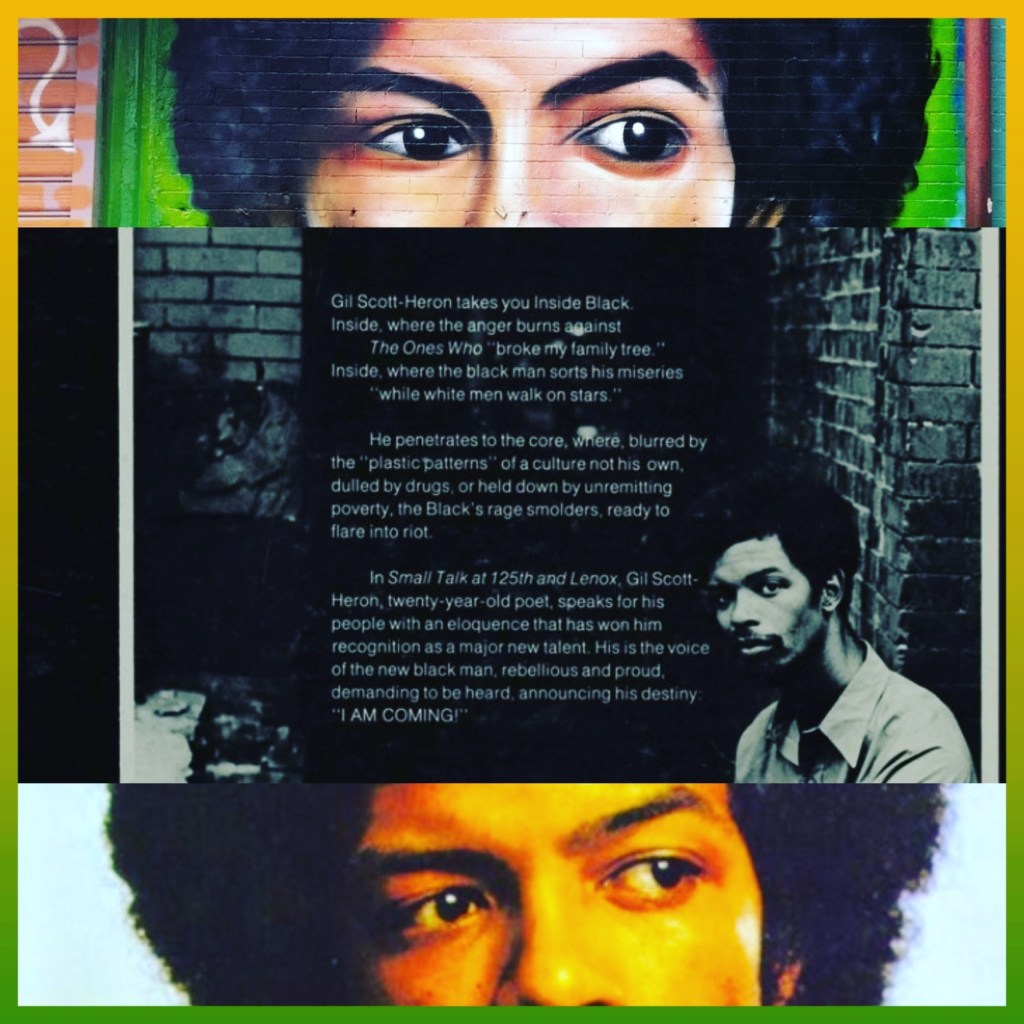
The rock and subcultural scenes of the 1960s – 1980s were all about experimenting with new blends of music. In addition to orchestral minimalism, Bob Dylan was known by the mainstream anti-war community of introducing rock music that had lyrical poetry.
However, although Dylan can be credited as being one of the iconic lyricist of his generation, he certainly wasn’t the first. According to Hermes, “the impulse to fuse poetry and music had been in the New York air for sometime – understandable in a city informed by the rhythms of jackhammers, subways, car horns, and people who won’t shut up”(pp. 58, Hermes). And to be personal, nor did it in my home city, Chicago. The environment and the culmination of socio-political strife that was the impeding result of the Civil Rights movement of the late 1950s to later 1960s.
Even with the passing of the Civil Rights Act of 1964 and deep coalitions of the Black, Red, Brown, Feminine, and Flower powers constantly organizing, there were still questions that were not vindicated. Housing, barbaric discrimination that lead to death (such as lynching that never became illegal on a national level), the moral question of integration, and reparations of the sins of the state on its minority people were still unanswered. And will be answered for a long time.
So, what better way to express those grievances publicly than with music? And express those grievances defiantly with poetry?
Over the inner city sounds and Afro-Caribbean beats, Gil Scott-Heron was creating a new sound in contemporary Jazz. His poetry in “Whitey on the Moon”(1971) and the first version of “The Revolution Televised” was complimentary to those Caribbean-Afrocentric beats of drums in the background.
Jazz was morphing into an inherently rock genre because of the the similar instruments such as a bass, guitar, drums and keyboards and moving away from an orchestral setting. Adding lyrics that spoke to the injustices of the Black community and even touching on the pathos of other oppressed communities such as the Chicano, low-rider culture of the 1960s – 1970s. “Home is Where the Hatred Is” is a perfect example of this new genre: strong bass rifts and a reliable tempo kept up by drums.
In addition to Scott-Heron being an icon to the birth of the poetry music, other poets contributed to the lyrical movement such as The Beats featuring Amiri Baraka who drew on the bebop movement of the 1950s to blend with contemporary jazz.
Overall, Gil Scott-Heron is not only the pride of the New York City music scene and one of the many beating hearts of the revolutionary machine in Chicago, his birthplace, but also another historical activist who refused to the monetization, hegemony, and surrender of the revolution. That revolution being the people, the oppressed, saying “No” to the state tyranny.
 Loose Lips Cast
Leave a comment